Stablecoins vs. SWIFT: Why Your Next International Supplier Payment Should Be on-Chain
Knackroot
12/30/2025
Introduction
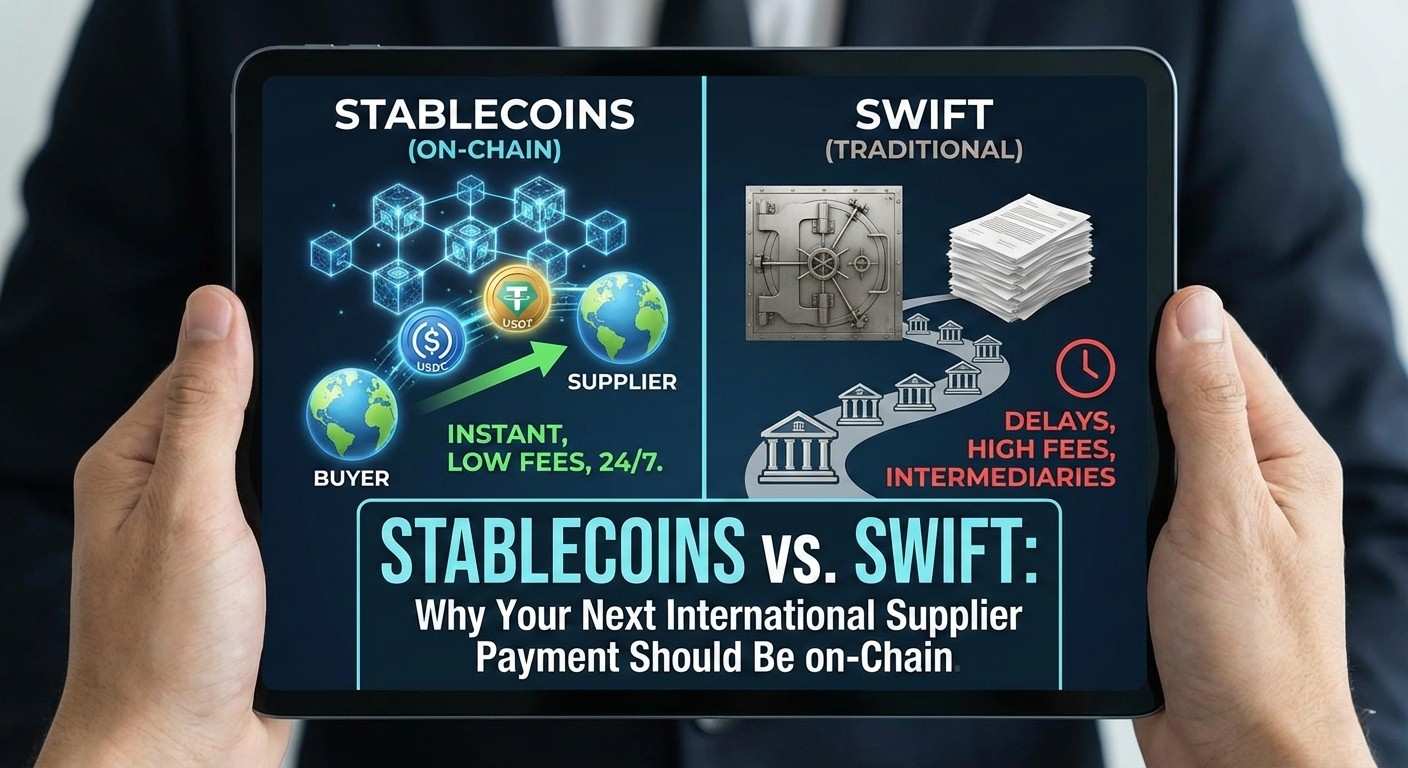
Paying international suppliers through SWIFT can be slow, costly, and opaque. Messages hop across correspondent banks, FX spreads stack up, and settlement can take 2–5 business days with limited visibility. Stablecoins like USDC and USDT offer a modern alternative: instant, 24/7 settlement on public blockchains with transparent fees and programmable payment logic.
“SWIFT is a messaging network; blockchains are settlement rails.”
The core difference
SWIFT relays payment instructions between banks, where final settlement depends on correspondent relationships, cut-off times, and reconciliation. On-chain stablecoin payments settle at the network layer, completing in minutes without intermediaries, with a verifiable record and programmable terms via smart contracts.
Key Advantages of On-Chain Stablecoin Payments
Moving supplier payments on-chain delivers operational speed, cost efficiency, and traceability that traditional rails struggle to match:
Supplier Payments and Trade Operations
Stablecoins streamline cross-border B2B payments and trade workflows while reducing operational friction:
Risks and Considerations
On-chain payments require sound governance and operational readiness across compliance, treasury, and security:
The Road Ahead
Stablecoin settlement will increasingly interoperate with bank-grade rails and CBDCs, with ISO 20022 messaging bridges and enterprise wallet platforms standardizing compliance and reporting. The result: faster trade finance, programmable invoices, and global liquidity with auditable settlement.
Conclusion
For cross-border supplier payments, stablecoins deliver speed, savings, and transparency that SWIFT cannot match. With proper compliance and treasury controls, paying on-chain becomes a practical, defensible upgrade for global operations—making your next international supplier payment a strong candidate to be on-chain.
Want to learn more about Blockchain or AI?
Explore more blogs and stay updated with the latest in Web3, AI, and emerging technologies.
Read More Blogs