Agents with Real-Time Voice & Video Capabilities
Knackroot
11/28/2025
Introduction
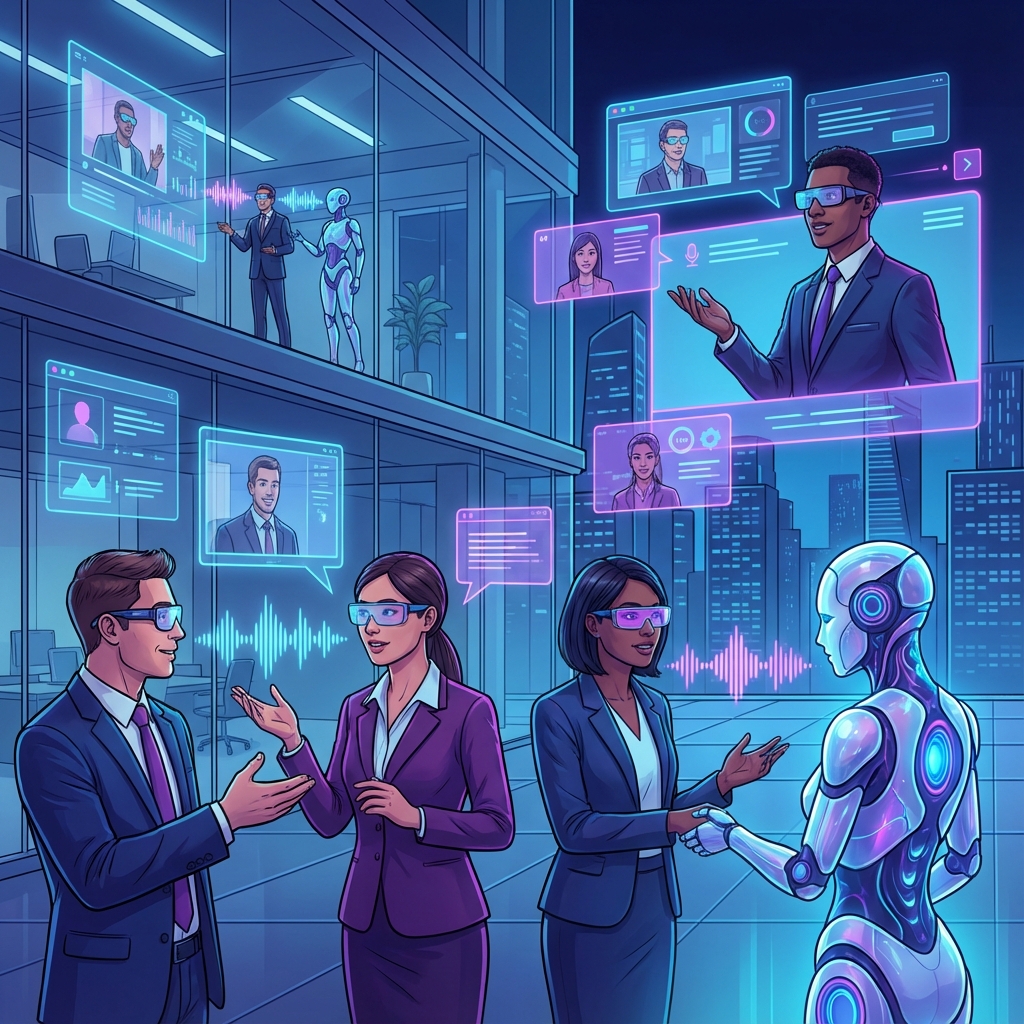
The era of text-based AI interaction is evolving into a more natural, immersive experience. AI agents equipped with real-time voice and video capabilities are breaking down the barriers between humans and machines, enabling fluid, conversational, and visually aware interactions. This shift is not just about convenience; it's about creating agents that can see, hear, and speak in real-time, opening up unprecedented possibilities for customer service, healthcare, education, and beyond.
“The future of AI isn't just about processing data; it's about perceiving the world and communicating as naturally as we do.”
The Rise of Multimodal AI Agents
We are witnessing a paradigm shift from static chatbots to dynamic, multimodal agents. These advanced AI systems leverage low-latency audio and video streaming, combined with powerful Large Language Models (LLMs) and vision models, to understand context, emotion, and visual cues instantly. This capability allows for interruptions, back-and-forth dialogue, and visual analysis in real-time, mimicking the flow of human conversation.
Key Capabilities
Real-time voice and video agents bring a new set of powerful features that distinguish them from traditional AI assistants:
Transformative Use Cases
The application of real-time voice and video agents spans across various industries, solving complex problems that text-only AI cannot:
Challenges to Overcome
While the potential is immense, deploying real-time voice and video agents comes with significant technical and ethical hurdles:
The Future Landscape
As hardware accelerates and models become more efficient, real-time multimodal agents will become ubiquitous. We will see them integrated into smart glasses, AR/VR headsets, and everyday IoT devices. The boundary between a digital assistant and a human companion will blur, leading to a future where technology is not just a tool, but an active, perceiving participant in our daily lives.
Conclusion
Agents with real-time voice and video capabilities represent the next frontier in AI. By adding the senses of sight and sound, we are creating systems that are more intuitive, capable, and human-centric. While challenges remain, the trajectory is clear: the future of interaction is multimodal, real-time, and fundamentally more natural.
Want to learn more about Blockchain or AI?
Explore more blogs and stay updated with the latest in Web3, AI, and emerging technologies.
Read More Blogs